
-
The Best Journaling Apps for Mac: 10 Digital Diaries Compared (2026)

Image: Matheus Bertelli
TL;DR
If you’re trying to establish a journaling practice or improve your existing one, finding the right digital diary can take a little research. This roundup covers the 10 best journaling apps for Mac in 2026. It includes powerful all-rounders like Day One, structured tools like Grid Diary, and free, built-in solutions like Apple Journal. Take a look at our honest reviews and handy comparison to find the solution that best suits how you think and write.
The benefits of journaling are no longer anecdotal — the science speaks for itself. Maintaining a regular writing habit has been shown to alleviate depression, reduce the stress hormone cortisol, promote neuroplasticity, and even boost your immune function and physical health. If you’re looking for some or all of these advantages, our list of the best journaling apps for Mac is here to help.
Our reviews include everything from powerful heavyweights to minimal writing tools. And every app has been considered with Mac users specifically in mind. This means we’ve factored in how native the experience feels, how well it syncs between devices, and how it handles privacy. Whatever kind of journaler you are, or want to become, there’s something here for you.
-
Best Habit Tracker Apps for iPhone and Mac (2026)
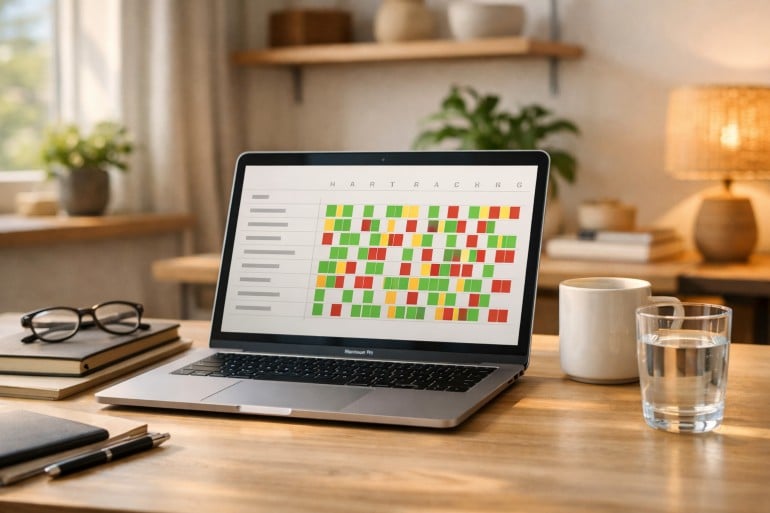
Image by: ChatGPTShifting the trajectory of our lives from stagnation to success often depends on one, seemingly simple, thing: pursuing the small daily habits that help us achieve our goals. This work can feel monotonous at times, even a little tedious, and as a result, difficult to remember and prioritize. But the impact of dismantling our negative habits and nurturing those that are positive can be enormous. Fortunately, we don’t have to do it alone. In 2026, there are a number of excellent habit tracker apps for iPhone and Mac we can use to help us along the way.
The right habit tracking app provides structure, motivation and accountability, ensuring you build consistency over time. Whether you’re trying to establish a morning routine, maintain client relationships or simply remember to step away from your desk, a strong habit tracker Mac app makes it easier to show up for yourself every day.
We’ve reviewed the leading habit trackers to help you find one that best suits your needs. Our list includes apps that can be used across both your Mac and iPhone, as well as a handful that are exclusively for one or the other.
Let’s dive in.
-
Warum lasse ich mich so leicht ablenken? 8 Tipps für mehr Fokus
 Bild: Nubelson Fernandes
Kurze Antwort: Sie lassen sich leicht ablenken, weil interne Faktoren (Stress, Müdigkeit, Hunger, psychische Erkrankungen) oder externe Faktoren (Smartphone-Benachrichtigungen, Unterbrechungen am Arbeitsplatz, Hintergrundgeräusche) Ihren Fokus stören. Studien zeigen: Wir verbringen 47% unserer Zeit gedanklich abgelenkt und wechseln im Schnitt alle 3 Minuten die Aufgabe. Die Lösung: Identifizieren Sie Ihre persönlichen Ablenkungsquellen und setzen Sie gezielte Strategien ein – vom Flugmodus über gebündeltes E-Mail-Prüfen und Website-Blocker bis zur automatischen Zeiterfassung.
Sie öffnen Ihren Laptop, setzen Ihre Prioritäten und starten in den Arbeitstag. Alles läuft rund, und Sie haben das Gefühl, dass ein produktiver Tag vor Ihnen liegt. Dann meldet sich Ihr Smartphone mit einer Nachricht. Vier E‑Mails treffen in kurzer Folge ein. Und Sie werfen „nur kurz“ einen Blick auf Ihren Social‑Media‑Feed. Ehe Sie sich versehen, ist der Tag vorbei. Und mit nur wenigen abgehakten Punkten auf Ihrer To‑do‑Liste fragen Sie sich: „Warum lasse ich mich so leicht ablenken?“
Sie sind nicht allein, wenn Sie sich ab und zu ablenken lassen. Laut einer Harvard‑Studie verbringen Menschen im Schnitt 47% ihrer Zeit damit, über etwas anderes nachzudenken. Und im Büro wird eine typische Bürokraft alle drei Minuten unterbrochen oder wechselt die Aufgabe. Da es nach einer Ablenkung über 23 Minuten dauern kann, wieder in den Fokus zu kommen, führt das zu zerrissenen Arbeitstagen.
Die Folgen sind weitreichend: Ablenkungen erschweren es, fokussiert zu bleiben, in Deep Work zu kommen und produktiv zu sein. Wenn Sie nichts gegen Ihre Ablenkungen unternehmen, leidet am Ende Ihr Erfolg.
Sehen wir uns an, warum Sie sich leicht ablenken lassen – und welche Tipps helfen, Ablenkungen zu begrenzen.
-
Time Well Spent: What it Means and How to Get the Most Out of Every Day

Image: Nataliya VaitkevichTL;DR: What is Time Well Spent?
Time well spent means using your hours on activities aligned with your personal values—whether that’s productivity, self-improvement, quality time with loved ones, or rest. It’s not about maximizing every minute, but being intentional so your days feel meaningful rather than chaotic. Key strategies include: setting clear priorities, limiting distractions (especially social media), practicing mindfulness, and using automatic time tracking to see where your time actually goes.
Spending time well means different things to different people. Some associate it with productivity, personal fulfillment or self-improvement. For others, it’s about spending quality time with loved ones or helping people in need. Many associate time well spent with a good work-life balance — days that feel full and rich both professionally and personally, without being exhausting or overwhelming.
In an age when busyness is elevated, even revered, well-spent time offers a refuge. Rather than encouraging us to succumb to the pressures of constant activity, it emphasizes the quality of our experiences over the quantity. If we’re spending our time well, we’re prioritizing meaningful pursuits that enrich our lives instead of frantically ticking off an endless list of tasks.
Here, we explore the ins and outs of this concept and look into the tools that can help you get the most out of every day.
-
Why Do I Get Easily Distracted? 8 Tips to Help You Focus
Image: Nubelson FernandesShort Answer: You get easily distracted due to internal factors (stress, fatigue, hunger, mental health conditions) or external factors (phone notifications, workplace interruptions, background noise). Research shows we spend 47% of our time mind-wandering and switch tasks every 3 minutes on average. The fix: identify your specific triggers, then use targeted strategies like airplane mode, scheduled email checks, website blockers, and automatic time tracking to stay focused.
You open your laptop, sift through your priorities, and get started with your workday. Things begin smoothly, and you sense that you likely have a full, productive day ahead. Then, your phone pings with a text. Four emails arrive in a flurry. And you decide to check your social media feed, just for a minute. Before you know it, the day is gone. And with only a handful of items successfully ticked off your to-do list, you’re left asking yourself: “Why do I get easily distracted?”
You’re not alone if you get distracted from time to time. In fact, according to a Harvard study, most people spend 47% of their time thinking about something else. And in the workplace, the typical office worker gets interrupted or changes tasks every three minutes. Since it can take over 23 minutes to get back in the zone after a distraction, this makes for disjointed and disrupted workdays.
The consequences of this are far-reaching. Distractions make it difficult to stay focused, invest in deep work, and be productive. If you don’t put steps in place to address your distractions, they can ultimately impact your success.
Let’s take a look at why you might get distracted easily, and what tips you can use to limit your distractions.
-
Setting Work Boundaries: 7 Steps for Better Work Satisfaction
 Image: CoWomen
Boundaries refer to the limits we set for ourselves. They’re a line in the sand that indicates we’re prepared to go so far and no further. Boundaries are important in all aspects of our life, including at work. Work boundaries help us to stay focused and productive, establish work-life balance, maintain constructive working relationships, boost work satisfaction, and prevent burnout.
If you battle to communicate your needs at work, if the lines between your professional and personal lives regularly blur, or if you constantly feel overwhelmed or exhausted, it’s worth paying attention to the boundaries you have in place. Are they strong enough? Do you need to renegotiate or reinforce them? Examining your boundaries critically can help you stay on track mentally, emotionally and physically.
Here, we explore the different types of boundaries at work. And we offer seven steps that will help you keep good boundaries in place — and reap the rewards.
-
How Work Breaks Help to Boost Focus and Productivity

Image: Brooke Cagle
Contemporary work culture tends to glorify busyness. We often feel pressured into working constantly, pausing only to lament how few hours there are in the day. But our frantic schedules tend to neglect one important fact: working incessantly isn’t sustainable. It isn’t healthy and it doesn’t result in good quality work. In fact, part of working hard — and well — involves integrating work breaks into our day.
This may seem counterintuitive at first, especially if you’re struggling to get on top of your workload and meet your deadlines. You need to work more, not less, right? Not necessarily. Scheduling 10 to 15-minute breaks throughout your day can actually help you get more done, more quickly. Breaks can boost your productivity, improve your creativity, and prevent you from experiencing productivity-killing burnout.
Here, we take a look at the benefits of work breaks, the different types you can take, and why burnout is such a big deal. We also offer a practical solution to help you step away from your desk from time to time.
-
The 4 Day Week – Halfway Trial Results and Participating Countries

There is a lot of talk around the six-month trial of a 4-day work week in the United Kingdom. The trial is run by the 4 Day Week Global Foundation who funds research into 4-day week practices, the future of work and workplace wellbeing. The UK trial is in partnership with Autonomy and 4 Day Week UK.
What is the 4 Day Week?
The 4 Day Week Global Foundation is a not-for-profit community established by Andrew Barnes and Charlotte Lockhart. It aims to “provide a platform for like-minded people who are interested in supporting the idea of the 4 day week as a part of the future of work”. A future where workers get an extra day off per week with no reduction in pay. This is based on the 100-80-100™ model. Which stands for 100% pay, for 80% of the time and a commitment to maintain at least 100% of the output.
The UK Trial Halfway Results
The UK 6-month trial kicked off in June 2022 and will conclude in November 2022. The full pilot programme started in February this year with information sessions and a call to sign up. More than 70 UK organisations signed up for the 6-month trial with the halfway point results published last month. Some of these results include:
-
Time Management & Mental Health – Create the work-life balance you need

In support of this year’s World Mental Health Day theme ‘Making Mental Health & Well-Being for All a Global Priority’, we have a unique roundup of articles to help you create a healthy work-life balance and build the life you want.
You may be a freelancer, consultant, entrepreneur, part of a team or manage a team – whoever you are, life is busy. Our lives actually seem to be getting even more and more busy; and it’s getting more difficult to keep on top of everything we need to do.
Did you know that time management isn’t about getting everything done, but rather about getting the important things done? Psychology Today refers to time management as “a skill necessary for achieving a better quality of life. By managing your time in a more efficient way, not only will you get the right things done, but you’ll also have enough time to relax, de-stress and breathe more freely.”
Discover how you can improve your time management skills for a better quality of life with this collection of Timing articles.
- Timing Management Tips: How to Work Less?
- Time Scarcity Can Be Beaten! Here’s How to Break Free
- Mental Health Challenges as a Freelancer — and How to Cope
- How to Recognize Toxic Productivity With Time Tracking
- 10 Ways to Overcome Time Anxiety Using Time Tracking
- Why (and How) You Should Schedule Time For Your Relationship
These articles include tips on how to work less, understand what some of the biggest time management challenges are, as well as helpful references and apps that can help you create the life you want.
-
Why (and How) You Should Schedule Time For Your Relationship
Time tracking is for work… right? Think again. While it might seem unromantic to schedule time with your significant other, it can actually be the opposite.
Do you remember the early days of your relationship, when you would move earth and heaven to make a date work? It didn’t matter if you were tired from work, just back from a trip, or had something else that mysteriously ‘just happened’ to get rescheduled, if you were really excited about someone you would make time to see them. What about now? Do you still make time for your partner?
As February is the month of Valentine’s, it’s a good excuse to think about your lovelife — whether you subscribe to the idea of Valentine’s Day or not. Regardless if you’ve been together six months, a year, or married for ten, chances are you’ve fallen into a rut or five. Particularly if you live together, chances are you’re spending a lot of time in each other’s company without actually being together. Overtime, this will naturally lead to dissatisfaction in and the breakdown of your relationship.
Aside from not wanting to lose your loved one, why is it important to work on being happy and present in a relationship? Well, studies show that when you’re in a fulfilling relationship, everything in life is better — from your performance at work to your cardiac health. We’ve come up with five different ways you can schedule time in your relationship, for a happier relationship and happier life.
Read More →
