
-
Case Study: Using Time-Tracking to Optimize Results & Grow with Wahm Workspace

Bianca Johnson started Wahm Workspace to provide virtual assistance for creatives who want to spend a little more time on their craft, and a little less time on things like posting on social media, responding to emails, or bookkeeping. You can imagine then, that as the lead VA in her own business, Bianca has got a heavy administrative load herself. What’s her secret to staying on top of the ball with multiple clients and a near-endless list of tasks? Time-tracking.
That being said, it hasn’t always been easy to find the right kind of time-tracking tool to measure, label, and organize hours spent on tasks like inbox management or web development. “I tried them all,” said Bianca of various time-tracking tools. Finding most of them “clunky” and unhelpful, however, led Bianca on a quest for the perfect time-tracker: a tool that would give her optimized results while still allowing her to remain mostly hands-off.
When Bianca discovered Timing, she found an automatic time-tracker that produced fine-tuned results. Unlike the majority of time-tracking tools, she didn’t have to continually switch gears throughout the day to make sure her time-tracking app was accurately capturing her working hours and minutes. Not only that, she discovered that Timing generated powerful, detailed reports she could use with clients in a range of situations. Finally, she found she could take on more clients (and more income) by utilizing a few simple strategies to optimize her results.
Here is how Timing has helped Bianca to scale up Wahm Workspace and get better results for both her and her clients.
-
Time Tracking for Video Editors & Podcast Producers
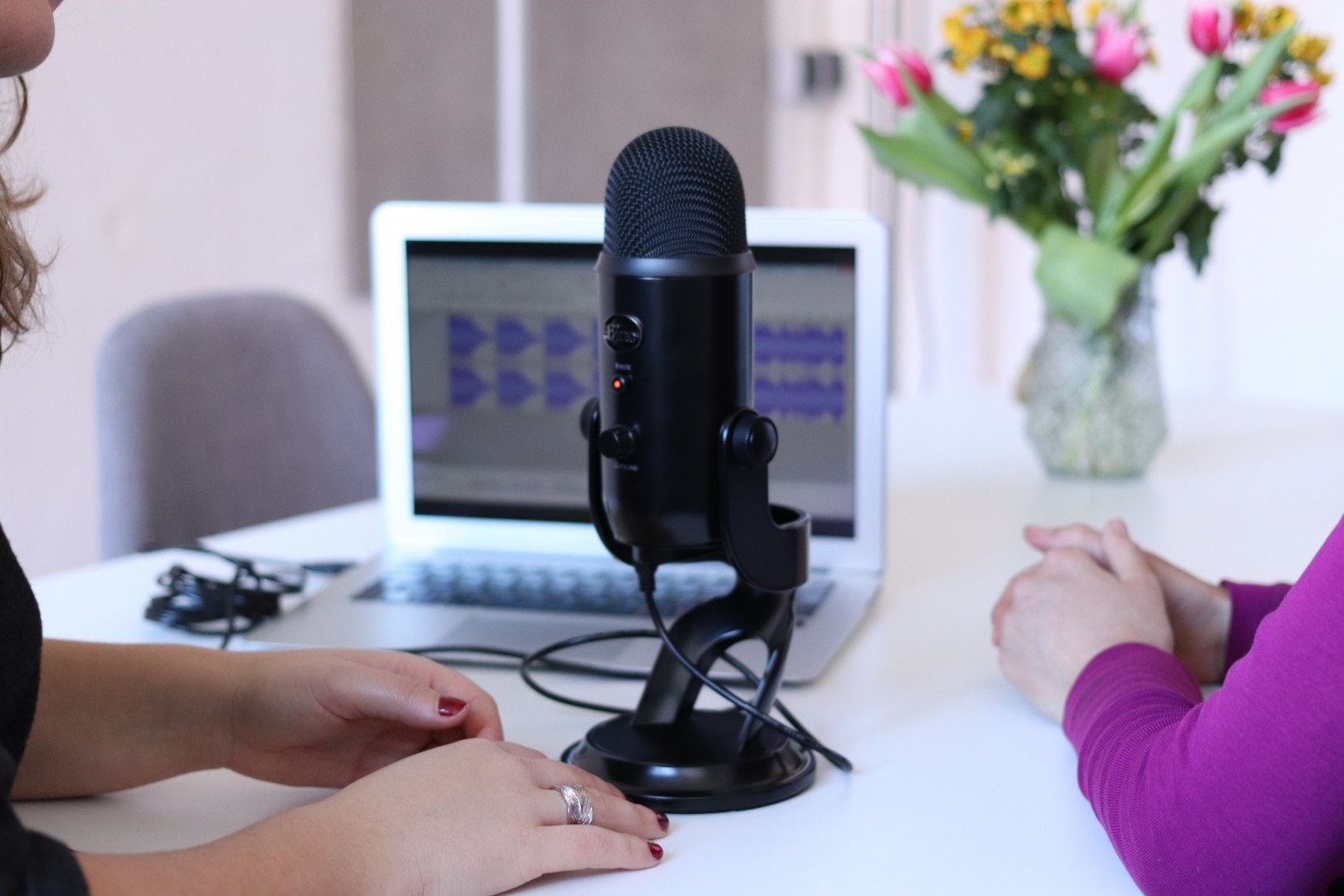
Editing video and audio content is uniquely detailed work. As anyone who has spent two hours working on a 5-minute clip knows, there’s a lot that goes into producing that video or Podcast episode. That’s why professionals like podcast producers and video editors need extraordinary focus, meticulous attention to detail, and lastly, a keen sense of timing.
But these creatives don’t just need to know how to time things right. They also need external tools to help them track their own working hours. In this article, we’ll take a look at why automatic time tracking can be so beneficial to video editors and podcast producers; specific time tracking strategies for these creatives; and features to look for in a time tracking system.
-
Attendance Tracking for Remote Work with Timing: A 3-Step Guide

Tens of millions of people are now working from home as a direct result of the Coronavirus crisis. In fact, some of the largest companies in the world – such as Apple, Google, and Amazon – are asking employees who regularly work in-office to stay home in order to mitigate the spread of the virus, which has had a devastating impact worldwide.
How can employers and employees stay attentive and productive, even in the midst of a crisis?
While we at Timing can’t magically make you more productive, our solution for tracking time and productivity might help get more order into the chaos we are all struggling with these days.
-
The Full-Time Employee’s Guide to Time-Tracking

As a full-time employee, your pay isn’t necessarily connected to the specific amount of hours you work. That being said, time-tracking – keeping careful track of how you spend your working hours – may not sound like a valuable use of your effort.
Time-tracking, however, has the potential to transform your job, help you meet your goals, and give you powerful leverage with your employer.
Knowing how many hours you’re spending at work, and what exactly you’re doing during those hours, can help you:
- Increase your productivity
- Take control of your work schedule
- Get richer insight into your in-office and out-of-office working hours
- Gain leverage to ask for a raise or change in position
- And more…
In the following article, we’ll look at specific ways time-tracking can help you achieve the above, and potentially more.
-
How to Stay Productive When Your Home Life Feels Unstable

Life happens. Although most of us prefer it when our lives are smooth and unproblematic, the reality is that most of us will experience personal crises at some time or another. Death in the family, chronic illness, divorce, parenting issues, and financial burdens are just a handful of problems that might come at us unexpectedly. As if these situations weren’t difficult enough on their own, you’ll most likely face an additional challenge during seasons like these: Learning to stay productive in the midst of emotional and mental stress.
In this article, we’ll look at how to remain productive and on-task during your working hours, even when your home life feels unstable.
Read More → -
How to Create a Project- or Task-Specific Report in Timing

One of the most powerful benefits of using Timing is that it allows you to export instant reports that include details about how you’ve spent your working hours.
A detailed, project- or task-specific report can be especially useful when it comes to billing clients for your time–but it can also be used for:
- Reviewing your personal time usage on specific projects or clients,
- Estimating time usage/costs for similar projects or clients, and
- Leverage while proposing an increased rate to a client (or potentially, an employer).
In this article, we’ll take a look at how to create a report in Timing, as well as different types of reports you might want to generate to get richer insight into your most valuable resource: your time.
Read More → -
Tracking Time Spent in DEVONthink with Timing

If you are doing a lot of Deep Work, you might be spending hours performing research, writing, or crafting notes or presentations. Organizing all the information generated by these activities is a daunting task. Luckily, DEVONthink can help with that. DEVONthink is a data management system that can help professionals (and students) navigate and organize a wide range of documents at their disposal.
The challenge, however, with using this kind of system is tracking the time you spend on it. If you spend the majority of your workday on DEVONthink, it’s not necessarily helpful to see that you spent 7.5 hours on this app – when you know that you’ve worked on a whole range of different projects and subprojects.
Here’s the good news: Timing is now integrating with DEVONthink – giving you the power to track minutes and hours you spend on specific documents in this powerful data management system.
Read More → -
The Freelancer’s Guide to Creating and Tracking Invoices

As a freelancer, you rely on invoices to get paid for your efforts. Creating useful invoices can mean the difference between getting paid on time and having to wait months before receiving payment.
Sending invoices is a vital part of being a freelancer. Creating a smooth invoicing process will help your cash flow remain steady and get you paid without too much hassle. Getting paid quickly happens when you have and utilize efficient procedures. If your clients don’t know what to do once they receive your invoice, it’s going to take extra time to get paid.
Today’s post will help you as a freelancer understand the best ways to create and track your invoices. When you have better project-tracking practices, you’re in a better place to get paid for all of your efforts.
Create Different Invoices For Various Types of Projects
There are two significant ways freelancers can charge for their services: hourly and per project. Each method has different types of invoicing and different ways to track work.
Billing hourly is simple to track. All you need to do is find a way to track the time spent on each project and charge for each hour you complete. Some clients have a maximum amount of time you can spend on their tasks each week. If this is the case, you need to have measures in place to stop you from working too much. If clients have listed a hard limit, they won’t pay you for any work done over that.
Read More → -
How To Use Time Tracking To Beat the 9-to-5 Grind and Work Fewer Hours

Conventional wisdom has told us that working from 9 to 5 is how you support yourself and your family, build wealth, and save for retirement. But things have changed.
Younger workers, especially millennials, are looking for more out of their occupations than a steady income and a 401k. People want work-life balance, flexibility, and jobs that combine skill, passion, and purpose.
With the advent of digital nomadism and cloud-based systems, working when you want and where you want is more common than ever. In fact, by 2027, freelancers are anticipated to make up a majority of the U.S. workforce (!)
In theory, freelancers have the ability to mold their own schedules, pursue their own clients, and work exactly where they want — whether that’s on their living room couch, at a local coffee shop, or heck, at a downtown brewery.
That all sounds heavenly to us. But is it realistic to work as a freelancer, and still work fewer than 8 hours a day?
Read More → -
Time-Tracking Hacks for Students

One of the joys of being a student is managing your own time. If you’re a night owl, you can study until 2 AM and sleep in. If you’re an early bird, you can frontload all your work into the first half of your day, and be finished by 1 PM. But time management for students can be tricky, especially with distractions from your social life, extracurriculars, and more.
Thankfully, there are hacks to time management that still help you create the lifestyle you’re looking for. These strategies can even raise your grades, help you meet your academic goals, and cut down time spent in the library.
Read More →
