
-
Why Is It Important to Set Realistic Goals? Top 6 Benefits and Tips for Success

Image: Generated with Dall-ESetting work goals can help to give you clarity and focus, boost your motivation, and increase your chances of achieving your professional ambitions. But be careful, we’re often warned, you have to make sure your goals are realistic. Why? Why is it important to set realistic goals? What are the benefits? Can’t we just aim for the stars and hope for the best?
In the minutes after midnight on 1 January every year, millions of people set goals for themselves. Within the first six months, according to recent research, 93.5% have failed in their attempts. The majority have given up before the end of February.
The reasons why we fail are numerous and complex. In some instances, we haven’t adequately prepared ourselves. We don’t really know what pursuing our goals involves or what will be required for us to succeed. In other instances, we encounter unanticipated external challenges. We fall ill, the economy changes, a pandemic hits. But among the most important reasons is that our goals simply aren’t realistic in the first place.
Here, we look into six benefits you can expect if you set realistic goals, and offer tips for making your goals a reality.
Let’s get started.
-
Freelancing Red Flags: 16 Signs to Abandon That Problem Client

Freelancing is more popular than ever, which means more people and businesses are using freelancers to meet their needs. It’s a tremendous time to be a freelancer as nearly every industry is embracing this work model, especially since the pandemic.
But while many of your client relationships are healthy, productive, and lucrative, some just aren’t worth the trouble. As a freelancer, it’s smart to identify your problem clients and abandon them quickly. The sooner you call it quits with a bad client, the sooner you can start working with a good one.
How do you predict if a client will be a problem? By looking out for red flags that indicate the arrangement won’t be pleasant for you. This article lays out the top freelancing red flags and what to do if you spot them.
Read More… -
Should You Call Yourself a Freelancer? Why Your Title Might Be Holding You Back
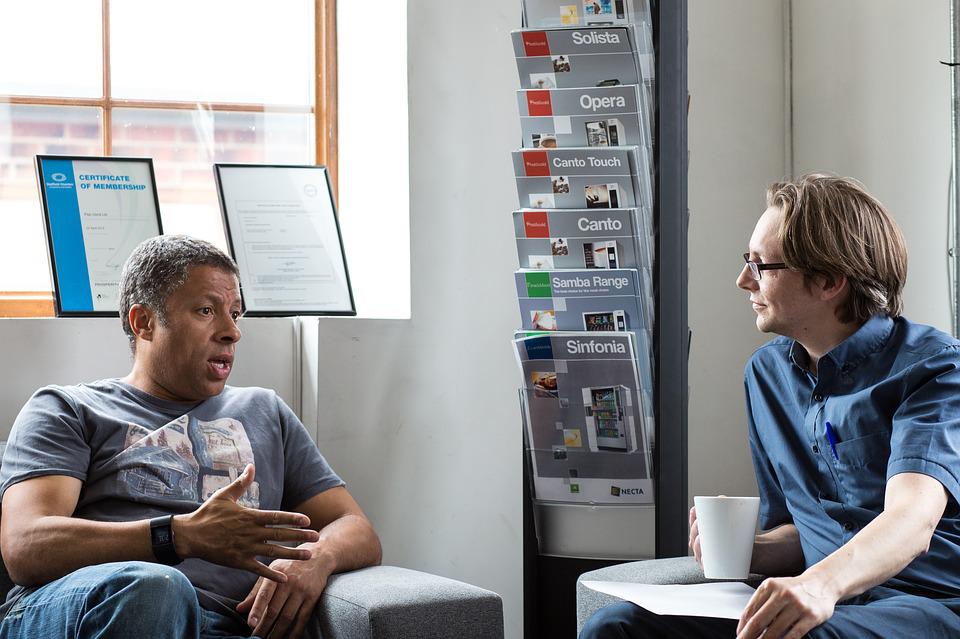
The words you use to describe yourself matter. Words affect your personal brand. They influence people’s perception of you, especially when a few words is all they know about you. If you want to be a successful freelancer, you need to be thoughtful with the words you use to describe yourself and your work.
The words we speak aloud can even affect our own brains. Simply introducing yourself to a client can change the way you view yourself. If you refer to yourself as an experienced professional, eventually, you will start to think of yourself as such. But if you refer to yourself as an amateur or newbie, that’s exactly what you’ll be.
Self-perception is important because words can influence your own mood and behavior. Having repetitive negative thoughts can activate the brain’s fear center. If you think of yourself as an imposter who lacks control over their work and career, you’ll present that message to clients and prospects through your behavior and language.
Your title is one of the first pieces of information that prospective clients learn about you. It should tell clients who you are and how you can help them. This begs the question: Are you introducing yourself properly? Does it make sense to call yourself a “freelancer,” or is there a different way to set the stage for client relationships?
In this article, we help you understand whether it makes sense to call yourself a freelancer or if a different term is more suitable for your career.
-
Is Freelancing Worth It? How to Determine if Freelancing is Viable

Like many professionals, you might be wondering if you can make a living as a freelancer. After all, lots of people are trying it. A FlexJobs survey found that 36% of U.S. workers freelanced during the pandemic. That’s an increase of 2 million since 2019. According to a Fiverr study, 68% of remote workers are interested in freelancing due to the COVID-19 pandemic.
That isn’t to say that people are only freelancing because of the pandemic. Countless professionals are tired of traditional employment. They want work that’s satisfying, fulfilling, and adaptive to their life goals. It’s no surprise that the freelance/gig economy is more attractive than ever.
For some people, the switch to freelancing is forced. They lose their job (often due to the pandemic) and have to make ends meet by finding new ways to earn income. Others do it by choice. They choose to abandon a life of traditional work in search of something more fulfilling. You’ve probably witnessed friends and family attempt freelancing.
In this article, we help you decide if freelancing is right for you. We’ll cover the benefits and drawbacks of the freelance lifestyle. Then we offer some questions to ask yourself to help you decide if you’re ready to make the switch.
-
How to Use Time Tracking for Better Freelance Job Bidding

Bidding on new jobs is arguably one of the most complex parts of working freelance. You need to send proposals to secure more work, but you don’t get paid for sending bids. Plus, there is plenty of rejection involved, making bids feel like an arduous chore.
Producing accurate bids will ensure you get paid what you’re worth, but first, you need a clear understanding of your time. You need to know how long tasks take to complete to factor into your proposals. If you get this part wrong, you could make a lot less money than you intend, or worse; you could even lose money.
For instance, let’s say you expect it will take three hours to write an article for a new client. But when you get into the task, it actually takes five hours. That’s two hours of unpaid time. If you knew the article would take five hours, you might have asked for a higher rate. Getting the time estimate right is even more critical for those who bill by the hour.
So how do you get a firm understanding of how you spend your time? Guesses and estimates are not good enough. You need to create your proposals from a data-based perspective by looking at your history. To get this information, you need to track your own time using time tracking software to get this information.
In this article, we teach you how to produce accurate freelance job bids by using time tracking software. These tips will make sure you are getting paid for your work.
-
How to Create Trusting Relationships with Your Clients (and a More Satisfying Freelance Career)

When your clients come to you for help, they are putting their problems in your hands. They seek your knowledge and expertise, your time, and your labor. Each client takes a risk when they hire you. Even if they already know the quality of your work, they assume an opportunity cost every time they engage with you.
If you want your clients to come to you right away when they need help, they need to trust you. They need to know that you have the solutions for their problems and that you will meet their needs in a fair, organized, and honest way.
We have to be honest though: Building trust with your clients is not quick. It takes time, effort, and attention to detail. You have to work for their trust, building it little by little over time. Some clients will trust you after the first job. Other clients require years of partnerships before you become a trusted ally.
In this article, we are going to explain why it is important to build trust with your clients, then we will offer some strategies to build that trust.
-
The 7 Best Time Tracking Tools for Freelancers

Any successful freelancer knows that time tracking is an absolutely critical part of finishing tasks and projects on time. Though you can easily try to track time by hand–taking manual notes on an app, or even with old-fashioned pen and paper–you’re a lot more likely to succeed with time tracking software. Share on X
In theory, time tracking software helps you to succeed at getting all the juicy benefits out of tracking time, like successfully completing tasks and projects on time, managing your work hours well, and gaining insights into your work life that ultimately help you to become a better, more lucrative freelancer.
In the following article, we’ll take a look at the seven best time tracking tools to help you get the most out of time tracking.
-
Why Time Management is Key to Building Your Income

Interested in building your income?
Who isn’t?
A higher income potentially means more financial stability…finally taking that vacation…putting a down payment on a house…or simply having additional cash to do (or buy) more of what you love.
Here’s the thing: many of you might equate “higher income” with grinding out more hours on top of an already loaded work schedule. Earning more may not feel feasible when you’re already feeling exhausted at the end of the workweek.
The good news? You may be able to earn more money not simply by working harder, but by improving how you manage your time.
In this article, we’ll look at why time management is key to becoming a more efficient worker, and in the process, a higher earner. We’ll also look at how 9-to-5’ers, freelancers, solopreneurs, entrepreneurs, and job searchers alike can build their income through more strategic use of their time.
-
10 Steps for Optimizing Your Time Tracking with Timing

If you’re a freelancer, you probably already know that time tracking is, well, worth your time.
On a micro-scale, time tracking gives you valuable insight into how long you spend on specific projects and activities; your most productive hours of the day; and what, if anything, may be distracting you from your priorities.
On a macro-scale, time tracking can help you develop greater time management skills, become more productive, and earn more cash (who doesn’t want that?).
That being said, there’s a right (and wrong) way to track your time. Tracking your time incorrectly, which often results from manual tracking or start-and-stop timers, can do you more harm than good by giving you an inaccurate picture of how you spend your precious minutes and hours.
But by following strategic steps in your time tracking, you can get the most out of this wise and productive habit – helping you to gain more detailed, in-depth knowledge of your own work habits, speed, and level of efficiency.
Read More → -
How to Leverage Your Time-Tracking Data for More Earnings and Better Productivity

Congratulations! You’ve started to successfully track your time.
You’ve got the reporting to prove your productivity and effective time management. You know where and how you’re spending your precious minutes and hours, and at what points in the day you are most productive. You’re headed in the right direction towards effective time management.
Now what?
You’ve tracked your time. Now, you’re ready to leverage that valuable information to prove your worth as a professional resource, help you become a higher earner, and increase your productivity.
Read More →
